Tuesday, October 16, 2012

For Mankind. By Mankind

Continued...Mr. Juneja attributes their stupendous growth to the fact that, “sharing fortunes within the company amongst all employees is highly valued.” Citing an interesting and a heartwarming case he says, “We encountered a very unfortunate accident in the recent past. One of our managers succumbed to cancer last year. It was upon us to get his daughter settled. Compensation was immediately doled out and things were arranged for the mother daughter duo.”
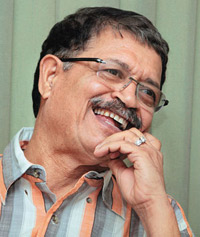
Mr. Juneja also believes that the incentive policies are such that it makes his employees work hard. “We always think about the patients, the consumers and hence we have always lowered the price bands,” informs he. He also wants to build a charitable hospital in Meerut for the underprivileged.

Transparency is what Mr. Juneja firmly believes in. He says that following an open door policy at work has helped him connect better with his employees and since they are free to discuss issues with him there is harmony at work. “Ours is like a family working together,” says he.

Mankind subscribes to the equal opportunity principle and respects merit and empowerment of all professionals, regardless of their experience or socio-economic background. With that comes the special training for all employees. People are trained through development-oriented programmes.

The training programmes for employees exist at all levels of the organisation. These include, class room training, including a 25-day training programme for new members in sales; refresher courses to update the field force’s product knowledge; as well as, management development programmes to polish acquired skills. Click here to read more...

Read More IIPM Related Articles
Zee Business Best B-School Survey 2012
Prof. Arindam Chaudhuri's Session at IMA Indore
IIPM IN FINANCIAL TIMES, UK. FEATURE OF THE WEEK
IIPM strong hold on Placement : 10000 Students Placed in last 5 year
IIPM's Management Consulting Arm-Planman Consulting
Professor Arindam Chaudhuri - A Man For The Society....
IIPM: Indian Institute of Planning and Management
IIPM makes business education truly global
Management Guru Arindam Chaudhuri
Rajita Chaudhuri-The New Age Woman
IIPM B-School Facebook Page
IIPM Global Exposure
IIPM Best B School India
IIPM B-School Detail
IIPM Links
IIPM : The B-School with a Human Face

Monday, October 15, 2012

EMBRYO STEM CELL RESEARCH: ETHICAL CONCERNS

Don’t play against nature, it will surely bite you back later...

Obama’s decision may revolutionise the medical research world but everything comes at a cost. US alone has 400,000 embryos in labs and it’s only a matter of time when selling embryos would become a vibrant business. Worse, some individuals have certain genetic uniqueness which make their body more resistant to chronic diseases than rest. Michael Crichton’s best seller named ‘Next’ precisely talked about how such people can be hounded by the research agencies for commercial cultivation of such blood. There are several instances where experiments with stem cell research created severe anomalies on those treated. Even if one keeps aside the religious reservation against stem cell research, if the objective is to create more healthy people then on any given day such artificial mutations are less effective than natural healing, something mankind has forgotten nowadays. Isn’t it better to do yoga to heal the body than tamper with genes? Think once..


Source : IIPM Editorial, 2012.

For More IIPM Info, Visit below mentioned IIPM articles.

 
IIPM : The B-School with a Human Face

Saturday, October 13, 2012

CUBA: RAUL CASTRO

Raul Castro is finally taking over in Cuba, US must now take notice

Strangely, US seems to be napping. Says Col. Lawrence, “For roughly 50 years, US policy vis-à-vis Cuba has failed – the most recent pointer being that while our administration talks of changing the command in Cuba, it appears to be ignorant of the fact that Cuba has already undergone regime transformation.” US needs to now do some signature moves towards improving relations with Cuba and lifting the nearly 50-year old embargo. US may find that its hopes of being a controlling force in Cuba, if and when Fidel Castro breathes his last, are mere hopes, nothing more...


Source : IIPM Editorial, 2012.

For More IIPM Info, Visit below mentioned IIPM articles.

 
IIPM : The B-School with a Human Face

Friday, October 12, 2012

INDIA INC: SHARE PLEDGING

Companies need to be proactive with disclosure of pledging

The more serious issue, again when we think about Satyam, is that the funds may be going elsewhere. “If the company is ploughing back the funds that promoters have borrowed by keeping shares as collateral in the company itself, then there’s nothing to worry...,” explains Ashok Jainani, VP (Research & Market Strategy), Khandwala Securities Ltd. Pledging as a practice is being exercised since ages to raise money.

However companies used to evade disclosure of their pledging details earlier. “These are notable corporate names, which people trust and expect them to make disclosures on their own. It’s done voluntarily by most global firms,” says a noted financial analyst on condition of annonymity. Many such companies claim to uphold the highest standards in corporate governance. But by responding to SEBI’s directive, these companies have done little to reassure investors of the honesty of their intentions (if their intentions are indeed honest that is!). It’s imperative for such companies to mend their ways, just as it is imperative for SEBI to ensure that no defaulters are spared.


Source : IIPM Editorial, 2012. An Initiative of IIPMMalay Chaudhuri
and Arindam Chaudhuri (Renowned Management Guru and Economist).

For More IIPM Info, Visit below mentioned IIPM articles.

Zee Business Best B-School Survey 2012
Prof. Arindam Chaudhuri’s Session at IMA Indore
IIPM IN FINANCIAL TIMES, UK. FEATURE OF THE WEEK
IIPM strong hold on Placement : 10000 Students Placed in last 5 year
IIPM’s Management Consulting Arm-Planman Consulting
Professor Arindam Chaudhuri - A Man For The Society….

IIPM: Indian Institute of Planning and Management
IIPM makes business education truly global

Management Guru Arindam Chaudhuri
Rajita Chaudhuri-The New Age Woman
IIPM B-School Facebook Page
IIPM Global Exposure
IIPM Best B School India
IIPM B-School Detail

IIPM Links IIPM : The B-School with a Human Face

Thursday, October 11, 2012

Tata Motors chief

The new Tata Motors chief has to be a visionary, no less than Ratan Tata himself

Dube has been at the centre of all Tata Motors initiatives recently and has been the front man in almost all important events of the company. Dube is young, dashing and has the knowledge and the works necessary for selling cars. Clearly, this man knows what he is selling.

Out of these two probable choices, it is very difficult to pick; however options are not limited. C. Ramakrishnan, the current CFO of the company could be the person worth considering as well. The person is good with his numbers and could well be the finance guy who can get the volumes back. Ostensibly so, from the choices: the young car guy, the veteran and the number cruncher, only Tata Motors can decide on the best man for the job. These are not very encouraging times to follow tried and tested strategies and the new Tata Motors head has to be a visionary, no less than Ratan Tata himself.


Source : IIPM Editorial, 2012.

For More IIPM Info, Visit below mentioned IIPM articles.

 
IIPM : The B-School with a Human Face

Wednesday, October 10, 2012

Caneel bay, a rosewood resort

This exclusive hideaway turned low-key luxurious resort, encircled by the beauty of the Virgin Island National Park, was established by financier and conservationist, Laurance Rockefeller, over 50 years ago. The essence of its virginity is mirrored by the dearth of room phones and TVs. However, you'll be doing anything but just sitting in one of the 160+ guest rooms, outfitted in soothing untamed nature with slick contemporary furniture and personal patios or balconies, spread over 170 acres. With a Sunset Cocktail Cruise, healing volcanic stone massages, weddings-on-board and a mind-body-spirit rejuvenating centre overlooking the retreat, it is a paradise which craves to be explored, but is still determined not to be exploited.

THE VIEW: Idyllic Caribbean beaches with stark-clear water and sand as white and fine as grinded sugar; not one, not two, but Caneel Bay boasts of seven of such private heavens. Heady rum-tasting, underwater slide show, tennis, fitness centre, windsurfing, scuba clinic, Sunfish sailboats and kayaks; there are enough activities to help you completely forget about your monotonous lives.

ARCHI TYPE: Just a short stroll from the beach, are the pleasantly strewn rooms throughout the resort. Natural wood and native stone form the structures while hand-crafted furniture and richly woven fabrics lend more warmth to the ambience. Celebrities wishing to escape the paparazzi (including Brangelina, Angelina Jolie-Brad Pitt) often book Rockefeller's private beach house, Cottage 7. Air-conditioning and ceiling fans are standard for all rooms, but are free from telephones, televisions and other modern-day diversions.

BON APPÉTIT: Surrender to innovative American cuisine against a breathtaking view at Caneel’s classy Turtle Bay Estate House, or a fixed, seven-course menu highlighting selections from their wine collection in the Wine Room. A more laid back place, called the Equator restaurant, is situated amongst the stone and coral ruins of an 18th-century sugar mill, which specialises in fresh seafood and grilled meats.

AROUND THE CORNER: A short drive from the resort, Trunk Bay is one of the Caribbean’s most frequented beaches. The relics of 1870’s Annaberg Sugar Mill which has been refurbished, is the best allusion of the cultural history during the colonial and post-emancipation era. Even the remains of the first Moravian church, built in 1749, can be surveyed at Estate Bethany and of course the famous National park. FROM UNDER THE CARPET: There are very limited options for reaching the hotel, relying mainly on ferries and boats. Lack of modern civic amenities (namely TV and in-room telephone) may dampen the spirit of the average couch potato.


Source : IIPM Editorial, 2012.

For More IIPM Info, Visit below mentioned IIPM articles.

 
IIPM : The B-School with a Human Face

Tuesday, October 9, 2012

Protection or obsession?!

Patents are ‘intellectual property rights’, not ‘muscle-based’ or ‘First-World based’...

When winning and losing is a matter of an idea, its protection becomes the paramount for any corporation whose fortune is dependent on it. And this is where ‘patents’ enter. However, at times, this motive of safeguarding an idea becomes more of an obesession, the recent issue involving Dr. Reddy’s Labs (DRL) is a case in point.

On January 14, 2009, a DRL consignment of drug losartan, valued at $500,000 (Rs.24 million), was seized by custom officials in the Netherlands. The justification behind the act given by custom officials was on grounds of “patent infringment”. So what was the reason behind the seizure? Well, in the Netherlands, the patent for the drug is held by DuPont (under the Cozaar drug brand), and therefore when the drug, which is used for treatment of high-blood pressure entered the Dutch borders, it was legally seized. However, a day later, under justification that the drug was headed for Brazil, the seized consignment was released.

This was not the first time that Indian generic exports have been shown the red signal by usage of patent litigation rights. One of the biggest names in the Indian pharma industry, Ranbaxy has already found itself in such an involvement with the cholesterol-reducing drug Lipitor. Pfizer, another Swiss drug major fired all cylinders to retain its monopoly on a multi-billion dollar drug whose sales were estimated to be $14.2 billion during 2007 alone. So which way did the final decision bend? Obviously Pfizer, for wasn’t it already a renowned First World name? Yes, the truth is different from what is presented before the law. ‘Anti-competitive’ theories and forces play the biggest role in the mental makeup of such law suit and many such patent litigation charges, more so in the developing nations, where costs in all quarters are lower, thereby promising better (lower) pricing to the drug, and rendering a comparative drug from a First World brand redundant!


Source : IIPM Editorial, 2012.

For More IIPM Info, Visit below mentioned IIPM articles.

 
IIPM : The B-School with a Human Face

Monday, October 8, 2012

This is my road ahead...

Bill Gates writes about his theory of creative capitalism... inputs coordinated by B&E’s Ruchika Chawla

Capitalism has improved the lives of billions of people – something that’s easy to forget at a time of great economic uncertainty. But it has left out billions more. They have great needs, but they can’t express those needs in ways that matter to markets. So they are stuck in poverty, suffer from preventable diseases and never have a chance to make the most of their lives. Governments and non-profit groups have an irreplaceable role in helping them, but it will take too long if they try to do it alone. It is mainly corporations that have the skills to make technological innovations work for the poor. To make the most of those skills, we need a more creative capitalism: an attempt to stretch the reach of market forces so that more companies can benefit from doing work that makes more people better off.

There’s much still to be done, but the good news is that creative capitalism is already with us. Some corporations have identified brand-new markets among the poor for life-changing technologies like cell phones. Others – sometimes with a nudge from activists – have seen how they can do good and do well at the same time. To take a real-world example, a few years ago I was sitting in a bar with Bono, and frankly, I thought he was a little nuts. It was late, we’d had a few drinks, and Bono was all fired up over a scheme to get companies to help tackle global poverty and disease. He kept dialing the private numbers of top executives and thrusting his cell phone at me to hear their sleepy yet enthusiastic replies. As crazy as it seemed that night, Bono’s persistence soon gave birth to the (RED) campaign. Today, companies like Gap, Hallmark and Dell sell (RED)-branded products and donate a portion of their profits to fight AIDS. (Microsoft recently signed up too.) It’s a great thing: the companies make a difference while adding to their bottom line, consumers get to show their support for a good cause, and – most important – lives are saved. In the past year and a half, (RED) has generated $100 million for the Global Fund to Fight AIDS, Tuberculosis and Malaria, helping put nearly 80,000 people in poor countries on lifesaving drugs and helping more than 1.6 million get tested for HIV. That’s creative capitalism at work.


Source : IIPM Editorial, 2012.

For More IIPM Info, Visit below mentioned IIPM articles.

 
IIPM : The B-School with a Human Face


Saturday, October 6, 2012

...And Why MOIL Should Think Twice About its IPO!

It’s India’s Largest Manganese ore Producer and a Mini-Ratna PSU too. But with Rs.17 Billion free Cash Reserves Lying Unused, one wonders why The Government wishes MOIL to go for an IPO?

Imagine yourself hundreds of meters below the ground level in a mine where explosions take place on a daily basis to break rock blocks, and tonnes of ore are extracted using the same route that is used by the miners as passage. Imagine trying to take sane journalistic notes at the same depth, with visions of the worst underground mining accident movies slamming across your mind. Well, that’s what MOIL does to you; or rather, did to us, when we attempted a real as-is-where-is story by going deep inside MOIL Ltd’s (formerly known as Manganese Ore India Limited) Kandri mines near Nagpur, India. It would be a slanted view if we were not to accept that in reality, leave our fervent imagination aside, MOIL has more or less achieved global standards in mining operations – the company has been the winner of the National Safety Award, now for many years continuously. To that effect, the mining behemoth also holds the trophy for the longest accident free period. But then, simply having a great safety record is not guarantee enough for an IPO to be successful – and that too when it’s your first IPO ever! For MOIL, the upcoming IPO of 33.6 million shares for raising around Rs.12.38 billion, is being viewed very positively by the industry, yet, for reasons that might go against MOIL.

But more of that later. First, MOIL’s strategic issues. The first gargantuan hurdle MOIL faces is its legacy – it’s a century old company (established in 1896 as Central Province Prospecting Syndicate) and has for most of its existence, stuck headfast to legacy management procedures, structures and vision. Yet, during the last decade, the company has hit the right chords and grown aggressively. Since financial year 2005-06, MOIL’s top line has grown by a mind-boggling 200% from Rs.3.6 billion to Rs.10.87 billion in the last financial year (2009-2010). Of course, FY 2008-09 was even better with Rs.14.39 billion as revenues. The key factor for the company’s long term success has been, without doubt, monopoly government facilitated access to mines – the reason why MOIL now caters to more than 50% of the country’s total manganese ore demand.

On the positive side for MOIL, manganese apparently has a fantastic future. After iron, aluminium and copper, manganese is the world’s fourth most used metal. CARE Research points out that 90% of the world’s manganese production is used for desulphurisation and strengthening of steel (30 kgs of manganese is required for producing 1 tonne of steel). Thus, the manganese ore industry is directly related to the volatility and the cyclicality of the global steel industry. The domestic steel demand is expected to grow at a CAGR of about 9.2% during the period FY11 to FY15. India’s steel production, which is around 70 MT at present, is expected to grow to 120 MT by that time. Correlating these figures appropriately, it’s clear that the annual demand for manganese ore in the country could grow to 4.1 million tonne (MT) by FY 2012 itself from the existing level of 2.4 MT at present. But unfortunately MOIL does not appear to be prepared enough to make the most of the opportunity. As per K. J. Singh, CMD, MOIL, “The company is set to increases its ore production to 1.5 MT from the existing 1.1 MT by FY2015 at an investment of Rs.7.68 billion.” And the basic reason, perhaps, is the slower pace in the development of new mines as against the robust demand. What’s more interesting is the fact that 7 out of 10 mines operated by MOIL are around a century old.


Source : IIPM Editorial, 2012.

For More IIPM Info, Visit below mentioned IIPM articles.

 
IIPM : The B-School with a Human Face

Friday, October 5, 2012

FIIS: JEOPARDISING INDIAN ECONOMY

Heavy Inflows of FII Money, Falling Exports due to Rising Rupee, And Widening Current Account Deficit! India is now walking on the same lane that Once Brought in the Asian Financial Crisis in 1997.

The RBI is currently increasing its base rates by around 25 to 50 basis points in almost every fiscal policy meeting to absorb the excess liquidity that was injected by the government to the economy earlier to lift the country’s GDP growth rate to over 8%. But in the process, it is drawing a higher inflow of foreign funds to the country’s economic system. As of now, the spread between India’s 10-year bonds and the US 10-year treasuries is standing at a record high of 5.7%, making India a hot destination for the overseas investors. In fact, considering the fact that RBI is still to reach to a peak in terms of interest rate hikes, India even stands as a better destination for FIIs as compared to other developing Asian markets where inflation is well under control (see chart) and hence chances of rate hike is lesser than India.

On the other hand, such a rush of FIIs to invest in the Indian market has created another hassle for the apex bank. As Bodhi Ganguli, Economist, Moody’s Economy points out, “All foreign-currency purchases by the RBI will have to be fully sterilised now to prevent from adding excess liquidity to the domestic economy.” But then, considering that India’s foreign currency reserve has grown over 5% from $256 billion to $269 billion between August 27 and October 29, the job in the hands of RBI does not seem to be an easy one. And if the country’s Broad Money (M3) is an indicator to be considered, then RBI is certainly struggling on this front as India’s M3 has grown by nearly 4.1% during that period to Rs.60.68 trillion (as on October 22) from Rs.58.30 trillion (as on August 27).

Many economists believe that the Asian crisis was more due to faulty policies than by market psychology. Taking a lesson from that, today, when global investors have become opportunists, Asian and Latin American developing nations have already imposed capital or currency controls to safeguard themselves against the unholy day. However, the Indian regulators have so far avoided such measures stating that they will act only if the inflows are “lumpy and volatile” or disruptive to the economy. But the billion dollar question remains, when was the last time we saw non-volatile hot money that was non-disruptive for an economy?

Add another paradoxical situation and one starts realising the gravity of the monetary side of our economy. Previously, the gold market and the real estate market together were negatively correlated to the stock market (that is, money would flow either to stock markets or to safer options like gold/houses). As things stand today, the correlation is positive. One of these will have to give pretty soon.

However, for the time being, the country can be in solace as the Planning Commission is still confident that these inflows can be absorbed by the country’s huge current account deficit. Interestingly, this was one of the reasons that in their race to attract foreign capital inflows, in 1997, the East Asian countries doomed their exports, which deteriorated their current account position and finally brought in the crisis by almost killing the value of their domestic currencies. India, at present, if not close to that position, is headed in the same direction. As noted economist Paul Krugman has argued, only growth in total factor productivity, and not capital investment, can lead to long-term prosperity. Thus, for a long term benefit of the country’s economy, today, Indian regulators must let go of the short term market benefits and put a check on the hot money flow. Else, sooner or later, India will end up being the epicentre of yet another Asian financial crisis.


Source : IIPM Editorial, 2012.
For More IIPM Info, Visit below mentioned IIPM articles.
 
IIPM : The B-School with a Human Face